Maximizing Nature's Bounty
+60172821219
enquiries@suriahelanglui.com
20 Dec 2012

The Challenge of Growing Tomatoes

When I was living in U.S,, during the summer months I was often able to buy fresh, vine-ripened tomatoes and there were infinitely much better tasting than the regular store-bought ones. I have always found growing tomatoes to be a real challenge, not only from the weather aspects but also insects and bugs seem to love them.  I have tried planting them a few times and from each time, there were lessons learnt.  Due to the weather, I bought some tomato seeds that were labelled to be “tropical-friendly”.  I used a high organic soil mixture with some sand content to seed the tomatoes.  Since I wanted to be able to move around my seedlings, I seeded them in polybags.  This also enabled me to keep it weed-free much easier. 

After about 3 days, they began sprouting.  I find that to ensure good root growth and healthy seedlings, it was important to ensure moist and not soggy soil condition.  A key item to remember, good root growth is essential as it is the point of entry for the nutrients that the plant needs.  So, if your plant has poor root growth, this will limit its ability to absorb the nutrients from you fertilizers.  When it was about 6″tall or approximately 10 cm, I transplanted into large polybags.  As the plant grew, more roots grew from the bottom level of the stem so I periodically added additional soil mixture to cover it which is 50% soil and 50% organic compost.  In order to accomodate this, when I transplanted them into larger polybags, I did not plant the seedling high but at about mid-level, allowing me the room to add additional soil in the future.

The tomato plants require support or else the plant will fall over as it does have a “soft” plant stem.  My plan is to retain these plants in a polybag throughout its cycle so whatever mechanism that I use had to continue to enable me to weed easily as well as move it when necessary.  I settled for creating “tube” fences from 2″x2″ metal fence material.  These tube fences can be re-used when this set of plants die so I felt it was a good investment – both of time and money.

As my cats love to keep me company as I work in my greenhouse, this also help to keep the plants  from being sat-on or knocked-over.  As the plants grow, I would help the plant along by assisting the branches to ease their way through the slots, keeping it balanced.  After about 2 months, I had to add a stake to provide additional support as well as weave string along the stems as the weight of the tomatoes weighed the stem causing it to “fold” down, reducing the nutrients necessary to the growth on the stem.

To keep the pests away, I use a serai wangi mixture to act as a pest repellent, spraying one a week on the whole plant.  The plants are watered daily, in the morning mainly to prevent the formation of moss on the soil and also to ensure that it has sufficient water to prevent the plant from wilting.  After approximately 8 weeks, the plants began to flower at the upper part of the plant, producing several yellow flowers per stem.

Within 1 week, the flower had fully bloomed and dried out followed by the formation of the “baby” fruits.  The average height where the fruits began to form was 1m so I was glad that my tubes were high enough to be able to provide the necessary support for the fruits.  You can see the changes on the growth of the fruits daily and every morning that I am at the farm, this is the first plant that I check.  I fertilize the plants about every week, using organic fertilizer, which will further decompose within the soil providing the necessary nutrients to the plant.  I find the timing of the application of organic fertilizer is different from chemical fertilizers which dissolves in water immediately.  I check the root exposure level of the plant regularly and top up the soil as necessary.  It is important to keep the soil moist but not soggy or the stem of the plant will rot at the base, killing the plant.

I decided to experiment – I have some plants in the greenhouse and some outside.  I find that they grow as well outside as inside and that as long as I kept the pests aways, it was fine.  I placed the outside plants with a east facing so that it received lots of sunshine in the morning but shaded from the late afternoon side.  As I had planted it in polybags, it was essential to watch the moisture content of the soil – if it dries out, the quality of the fruit will drop.  I continue to spray it with an organic pest repellent weekly and it is now on a fortnightly fertilization schedule.  The pest will attack the plant stem, leaves as well as the fruit so it is important to watch out for them.  At the farm, the main pests are aphids, ants and caterpillars.

It took about 2 weeks for the tomato to ripen to a nice red-vermillion color from when it formed.  The average time from seeding to actually being able to taste the first fruit was 10 weeks. 
Nutritionally, it is a great source of vitamin A, C and K as well as Manganese and Potassium.  It is also very low on Sodium.  It is a good source for Vitamin E and Bs.  Being chemical pesticide free, I just needed to rinse of any dust and dive into it.  One thing I can say, it definitely tastes infinitely better being fresh off the vine :).  Personally, I prefer to have this raw: in a tossed salad, chopped up and mix with cilantro, olive oil and salt or blended as a cold “soup” – either of these ways preserves the nutritional value of the tomatoes best.
Now that this batch is producing fruits, it is time to start seeding the next batch.  The work continues……

04 Dec 2012

Being A Small Farmer Part 5 – Growing Vegetables

In line with having an integrated farm, one of the key items is vegetables.  I selected the vegetables based on what I like.  Inherently, if you select what you like, then you would tend to pay more attention and I do believe this is true.  I have taken the route of planting most of my vegetables in polybags for two main reasons: (1) ease of weeds control and (2) to ensure that the vegetables get the fertilizer and not washed away or consumed by weeds.  The starting place is my greenhouse, where all the seeds get sown which is then transplanted and placed either within the greenhouse or outside.  What did I select?

To start with, I selected long green beans.  This is a versatile vegetable – you can eat it raw or cooked.  So naturally, going natural removes the worry of those pesky chemicals.  I started with sowing the seeds, in the greenhouse, which sprouted in about 3 days.  After allowing it to grow to about 10cm, I transplanted them into a polybag and placed them outside under its trellis.  The lesson I learnt from the first time that I planted this was that the chickens love to scratch around the plant, often uprooting it hence I didn’t get much yield from it.  This time around, there are in polybags with the “tube” fence to prevent them from getting to the plant on sitting on it.  This plant is a climber so having a trellis structure is key to its growth.  The soil mixture that I use has a high organic content to it.  I sprinkle organic fertilizer fortnightly in circle with a radius of  about 6cm from the base of the plant.  I am fortunate that the farm is located in an area where there is good rainfall and since it was placed outside, I haven’t had to water it, leaving the rain to provide the water.
 

It took about 40 days before it started to flower.  The flower and shoots are susceptible to a pesky black insect similar to aphids which will cause it to be destroyed.  My ally in this is the kerengga, those biting red insects.  Normally, I would try to get rid of them as they tend to bite you but in this instance, I allow them to roam freely thereby keeping the pests at bay.  The only problem is they like to make their “houses” with the larger leaves and to discourage them, I remove the leaves that they use to make their houses.  This serves a dual purpose – it enables me to control the population of the kerengga as well as well as encouraging new shoots.  I often snack on the green beans as I am doing maintenance the plants – picking them and munching on it without worrying about washing it.  The yield this time is also much better than my first attempt and we did manage to have some for sale at the Sunday morning market and it was gone very fast.

Another favorite vegetable of mine is the cabbage and it too can be eaten raw or cooked.  With the cabbage, one must be patient as it does take a lot longer compared to other vegetables before harvest.  However, I think it is well worth the wait.  It took about 5 days before it started to sprout and took about 3 weeks to grow to about 6 cm.  At this size, with at least four leaves, I transplanted them into polybags.  As with all my vegetables, the soil mixture has a high organic content to it.

I monitor the soil moisture and water it once or twice a day depending on the weather with pure uncontaminated river water.  I am still waiting for my cabbage to mature and be ready for harvest.  According to the seed label, it takes 75-80 days from transplanting, which means it will take about 96 – 101 days before harvest.  As the plant grows wide, It seems to be growing well and it is now about 40 days from transplant.  I do enjoy looking at the plant as it looks like a beatuiful big green flower.  This vegetable will remain in the greenhouse until it is ready to enable me to manage its pest control.  Those insects and caterpillars love munching on them and I find that with weekly serai wangi and water mixture spray, it keeps those pests away.  I am looking forward to eating it and I am not sure if any will make it to the Sunday morning market.  I guess I will have to plant lots more :).

15 Nov 2012

Catfish – And you thought it is plain……

Guess what?  This fish is one of the most versatile local fish that I have found.  The options of what to do with it is limited by your imagination!  First things first, select a good quality fish and this means that you should know the origins of your fish – the water quality, the feed, the time to market.  The water quality should be good, preferably a pond with continuous flow of fresh water coming in.  The feed should not consist of any elements of waste such as waste products from chicken and carcasses of dead animals. Don’t be shy about asking the seller.

For the general consumer, this may be difficult unless you know your fish seller so here are some tips:

  1. If it has a strong smell, run!!!!!
  2. If possible, buy them live.  However live doesn’t mean that it is good.  Check out if there is a lot of “slime” around it.  Less is better.
  3. Check the underbelly.  It should be white in color – not slightly yellow.
  4. The flesh of the fish must be firm.  If it is mushy, then it is not fresh.
  5. If the color of the flesh has a yellow tint to it, it has either been stored incorrectly or not fresh.
  6. The fat should also be white or the color of milk.

Cleaning this fish can be quite a challenge as it is often cleaned when it is live.  Some suggestions to assist you in handling the fish are:

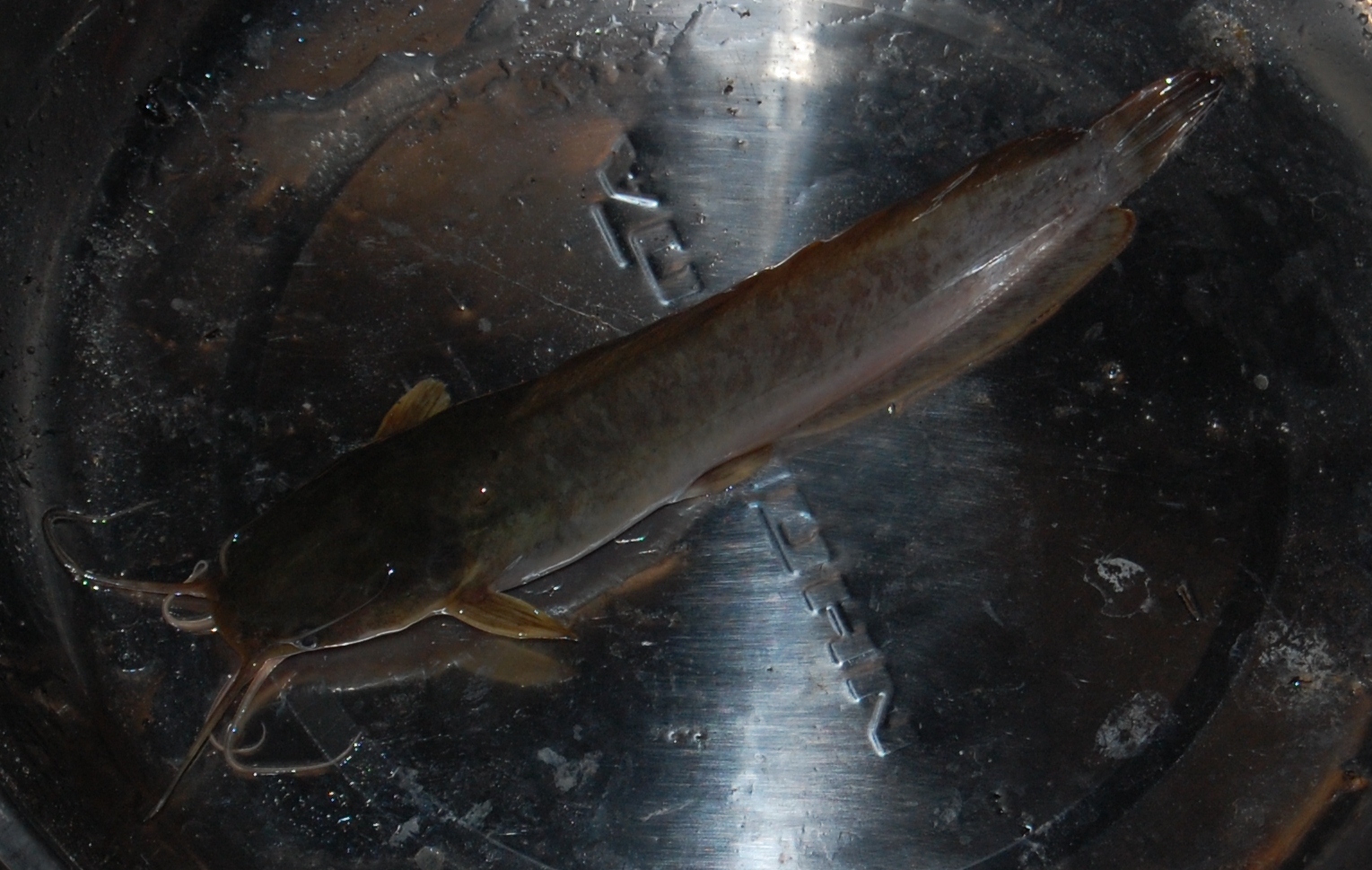
  1. Hold the fish as in the picture above.  Be careful of the side stingers.
  2. Place it in the freezer.
  3. Put it in some salt.

The above two will put the fish in a comatose state for ease of handling.  If cleaned properly, the fish should not be slippery or slimy to handle.  Once cleaned, if you are not going to cook it right away but want to store it for later, it should be frozen immediately.  Do not store it in its raw state in a chiller for more than a day.  This is one fish that retaining freshness is supreme.

The catfish can :

  1. be cooked from its cleaned, raw state
  2. be smoked, either salted or marinated previously
  3. be dried, either salted or unsalted. or marinated

The combinations that I have found to work out well for marinades are (1) salt and lemon grass (serai), (2) kaffir lime leaves (daun limau perut), salt and calamansi and (3) lemon basil (kemangi) and salt.  Locally, the popular ways of preparing smoked catfish is by cooking it with coconut milk and chillies or by frying it.  It is then eaten with rice.  The same applies for dried catfish.

The most often ways of preparing raw, whole catfish are masak lemak cili padi, asam pedas, cooked over charcoal and deep fried.  All these options tend to limit the accompaniment – rice.  However, if you get good quality fresh catfish which is more than 600g, you can fillet it and produce a nice piece of fillet which you can then cook in many other ways.  I have got feedback from people who have tried my filleted catfish that when they had cooked it and served it to other people, they couldn’t guess what fish it was.  Catfish (keli) was definitely one of their guesses!  You can:

  • marinate it with a various ways using many combinations of herbs and grill it,
  • you can cut it into bite pieces and create fish nuggets, you can dip them in batter and deep fry,
  • or you can even just bake it in the oven. 

This opens up options of its accompaniments:

  • you can eat it with salads for a light, fresh healthy meal,
  • with potatoes – french fries, mash potatoes, baked potatoes
  • or even on its own.

So, try it out and use your imagination :).

23 Oct 2012

Catfish (Keli) – A very versatile fish

Due to going the cheaper route, there is a lot of catfish (keli) out there that tastes just horrible.  Unfortunately, this has led to people having a poor impression of the taste of catfish.  This much maligned fish is really at the mercy of catfish producers who are bent on going the easy route by not taking care of the water and feeding the fish garbage. 
When produced properly, this fish is very tasty, definitely not smelly or having the “muddy” taste.  As with any fish, if you do not take care of its freshness once harvested, this further affects the taste and smell of the fish.  Do not blame the fish but blame it on these types of producers and the consumers who are not interested on taking care of themselves by eating quality food. So to the nay-sayers of the catfish, do not fault the fish if you have had a bad or not so good experience dining on the catfish.  I used to be a non-catfish eater but now I enjoy the catfish but of course, only from my farm :).
At the farm, I have spent about 2 years in studying and testing how to produce quality catfish.  The key components are the water quality and feed.  Flowing water is essential in ensuring that the water quality is good and fish wastes are removed regularly, and that there is sufficient oxygen as in keeping the bacteria in the water down due to wastes.  Even if aerators are used to ensure sufficient oxygen but if the water is not regularly refreshed, that the fish will be living in its wastes.  Think of it this way, if you are not willing to put your foot into the pond, why are you willing to put what is produced from that pond into your body? 
The second component is the feed,  Catfish that is fed with bacteria-laden food such as carcasses such as from goat, chicken, and pig, chicken innards, animal and human waste as well as all sorts of garbage will result in lower cost of fish feed which translates to cheaper prices but does not produce tasty fish.  After all, the age old axiom that “you are what you eat” can be applied to these catfish.  At the farm, the fish is feed with quality fish meal as well as “vegetables” such as tapioca leaves, keladi leaves, young shoots of tebrau and the inner pseudostem of the banana plants.  So, it is a matter of choice for the consumers.
When buying catfish, the first thing that you need to check is the underside of the fish.  Select catfish that has a white skin on the belly, avoid any fish that has slightly yellow color skin on its belly.  The flesh of the catfish should be firm and not “mushy” and the color on the skin of the catfish shouldn’t have a greyish pallor – these are indicators of the freshness of the fish.  When the flesh is mushy, it is a good indicator that the fish is already well on its decomposition process, faster for fish that have been fed with bacteria-laden feed.
It is always best to buy live catfish or for those that prefer cleaned catfish, catfish that was cleaned after just killing it and frozen within the hour.  Of course you would need to know how to handle the catfish when live – watch out for its stingers.
Now that you have the cleaned fish, what can you do with it?  In Malay culture, most of the time it is fried to a crisp or made into curries or masak lemak bercili.  Sometimes, it is grilled but not often as this requires for the fish to be fresh or you end up with this mushy fish.
From my experience and testing in my farm kitchen, this is a very versatile fish and you can do more than this.

  1. Whole smoked catfish – the fish is marinated with herbs – either kaffir lime leaves or lemongrass and salt overnight before it is slowly smoked.  Once ready, it is stored frozen to retain its “freshness”.  The smoked catfish can be eaten in many ways – cooked in savoury/spicy dishes or fried or heated and eaten with rice, sticky rice or even in sushi.
  2. Dried whole salted catfish – the fish is salted and sun-dried.  This fish can then be fried or cooked in savoury/spicy dishes.
  3. Catfish fillet – the fish is fillet resulting in nice pieces of boneless, skinless fillets which can then be cooked in many ways.  It can be breaded and baked, dipped in flour and pan-fried, dipped in batter and fried, seasoned with a variety of herbs, lemon, salt and pepper and grilled or pan-fried.  The ways of preparing the fillet is limited by your imagination.  To produce the fillets, you should select a fish that is at least 800gm so you can get good-sized fillets.

I hope more people will opt to eat quality fish in their diets and discover the versatility of the catfish.

14 Aug 2012

Free-Range Kampung Chicken

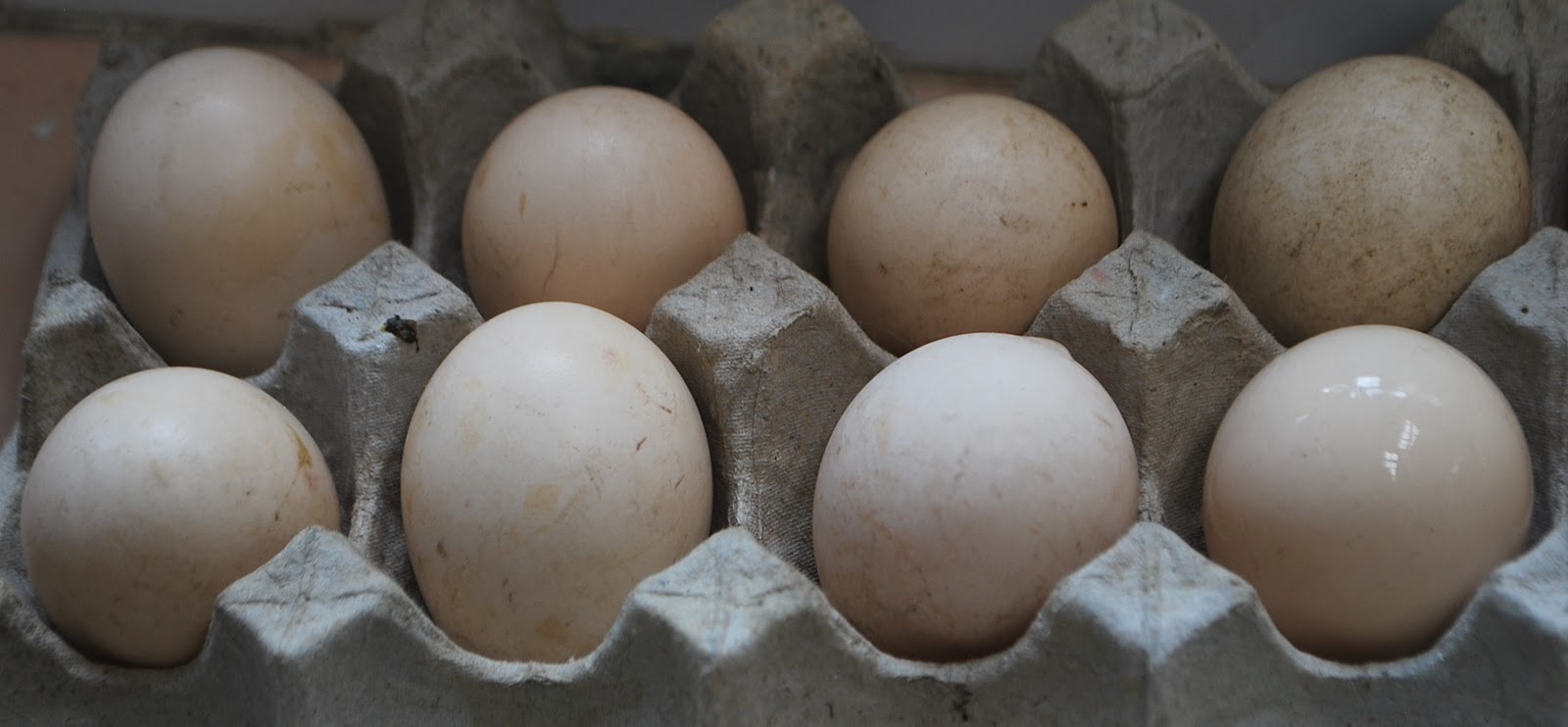
Over the past year, I have been testing out growing Ayam Kampung or Village Chicken.  During that period, I was monitoring the feed and growth as well as the general health of the chicken along with its predators.  I was also building my prime stock – the starter for all my chickens.  We also sold the eggs produced as there was too many for us to consume and it was well-received.  The chickens that we raise are strictly ayam kampung and also mixed-bred with ayam hutan.  The eggs produced have a golden yellow yolk and are smaller in size in comparison to the regular eggs.
I tried a few types of “homes” for them and finally settled on one, an enclosure with partial roof as well as laying boxes for the hens.  We also placed “standing” rails where the chickens put place themselves during the night time.  It appeared that they preferred to be above ground when they rest at night.  It was really interesting to watch them look for their spots as darkness fell.  As these chickens can fly, albeit not at a very high height, the fencing around the enclosure is about 12 feet high and to prevent them from getting up to the roof of their house, we placed the zinc vertically.
The hens seems to be happy with their laying boxes although I cannot understand why sometimes they want to share the boxes when there are empty boxes.  Alhamdulillah, they seem to lay every day and over this period of Ramadhan and Aidil Fitri, I have decided to let them hatch their eggs.  At last count there are over 50 eggs and it would be interesting to see how many hatch.  This will my starting point for seriously rearing chickens. 

It seems that these types of chickens are popular and not easy to find, and when you do find it, it is more expensive.  It makes sense as you require a larger area as well natural source of food for them supplemented with store-bought feed.  The growth period is also slower as compared to cage-reared chicken that spends its days in the cages.
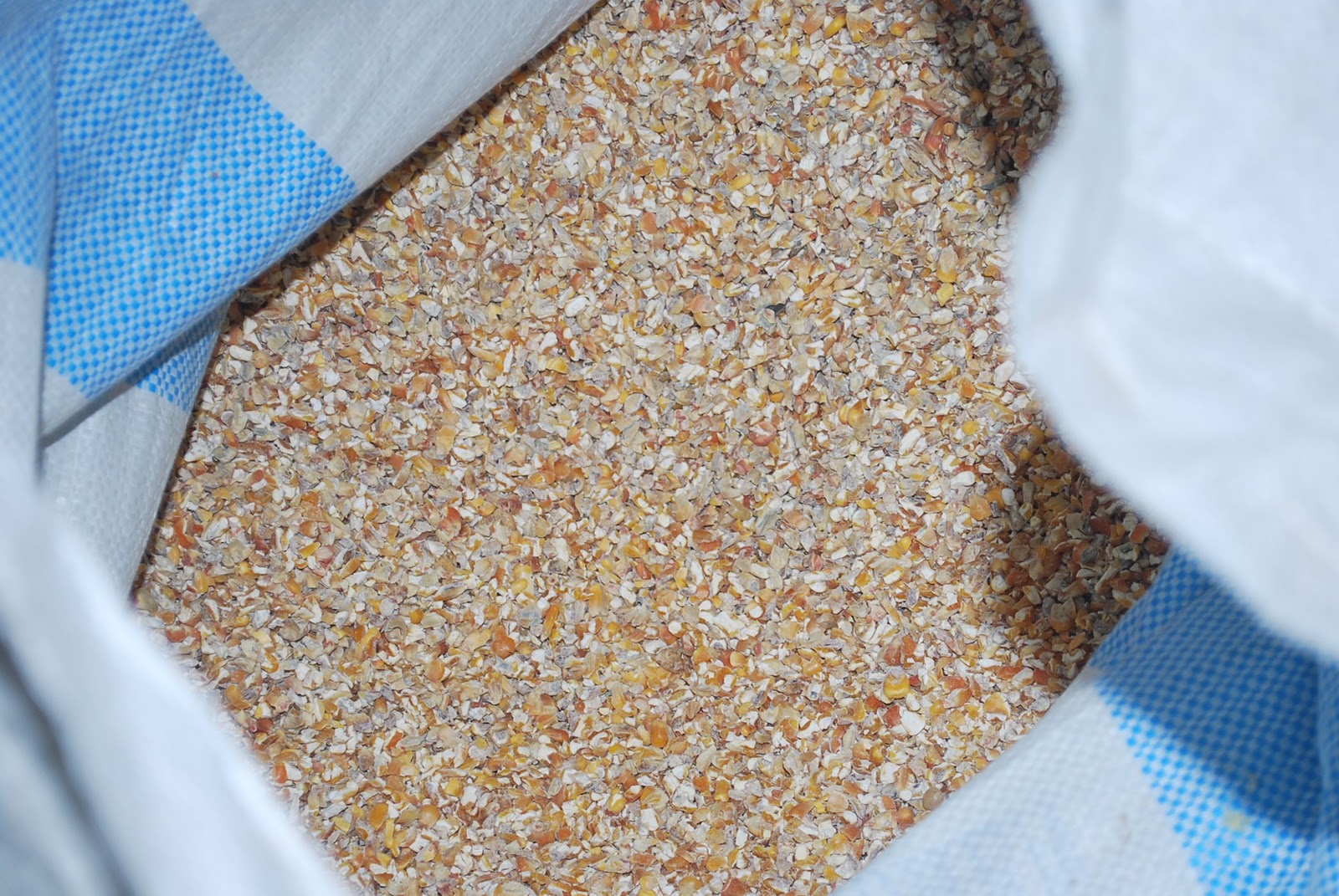
The chickens are let out during the day, to forage for insects and worms as well as the greens such as grass.  We also fed them with the extra ripe bananas and papayas as well as grated coconut that we had extracted the milk from.  So they also served as our organic disposal “machines”.  Every evening around 6pm, we feed them crushed corn and they seem to have this down to a tea.  Should I be walking around during this time, they will follow me until I feed them their corn.
The chickens I raise are strictly for food and not for fights.  So, I am selective as to who I sell it to.  If all goes according to plans, then we will be able to offer for sale free-range ayam kampung in the near future.

14 Dec 2011

The Chicken And The Egg

If you follow the nutritional research on chicken and eggs, it seems that it changes over time.  But then again, the body’s chemistry is still very much a mystery.  I remember a time when people were advised to avoid eggs due to high cholestrol and then recently I read that eggs were back to being good for you because the eggs do not contain harmful cholestrol.  The same goes with chickens but then again most chickens nowadays are given all kinds of medications as well as interesting types of feed.  I am also unsure of all these GM eggs – you know those eggs that claim to have Omega as well as other supplements.   Nutritionally, eggs contain the highest quality protein you can buy which has just the right mix of essential amino acids needed by humans to build tissues. It is second only to mother’s milk for human nutrition. In addition, eggs have thirteen essential vitamins and minerals.  Egg yolk is the major source of the egg’s vitamins and minerals.  A large egg contains only 70 calories and 5 grams of fat.  Egg yolks are one of the few foods that are a naturally good source of Vitamin D.

Hence, I embarked on my own journey of – rearing chickens and producing eggs.  As the basic principle of SHL is to stick as closely as possible to natural farming, the chicken currently get to run around the farm all over the place, including sometimes entering the house!  They have also started to become a nuisance to my newly planted crops, scratching the soil around it causing for the roots to be uncovered as well as at times, totally destroying the plants.  I started with 28 chickens and chicks, 3 of which were rooters, and of different ages, ranging from a month old to about 1 year old, all “kampung chicken”.  In about 9 months, I now have 50 chickens and chicks.


Corn feed

  The chickens spend the day scrounging all over the farm for food and I supplement their diet with corn and rice as well as over-ripe papayas and bananas and leftover farm produce such as tapioca and sweet potatoes.  As I do not use pesticides on the farm, I do not have to worry about the chicken consuming harmful residues.  I enjoy watching them as they feed, especially the baby chicks and how they avoid from being stepped on by the bigger chickens and they look so cute 🙂

The chickens are free to wander all over the place, gathering their eggs was a challenge, mainly due to finding the location.  I knew that they were laying the eggs somewhere as from time to time, I would see the mother hen with newly-hatched chicks, happily strolling and being quite noisy.


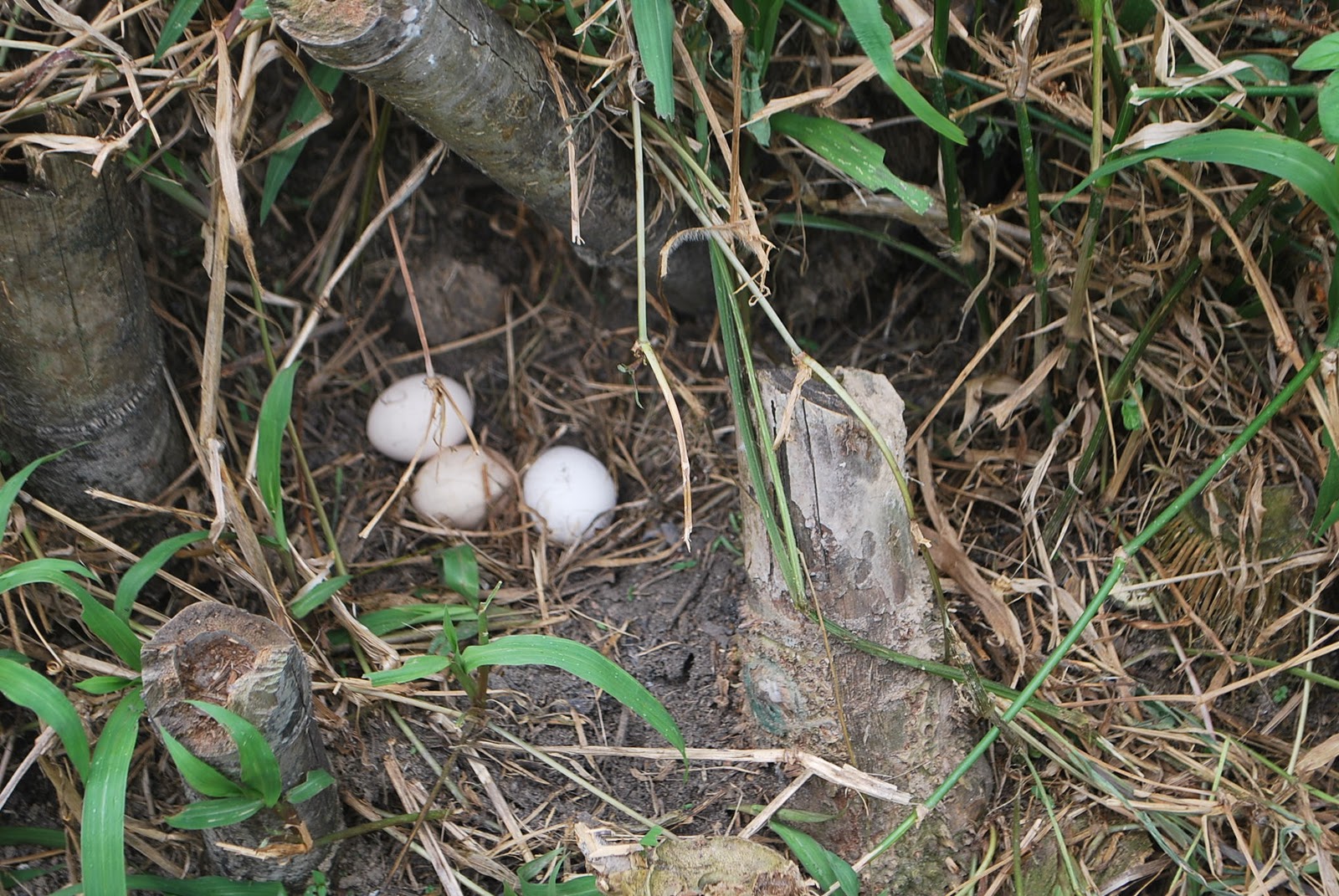
Nest found

Sometimes, I was lucky to find the nest but as the hen was already sitting on the eggs, I didn’t take the eggs as I wasn’t sure how long the eggs had been laid.  At other times, I managed to locate the nest early enough so I was able to collect the eggs.  With over 2 acres of land available to them, and the challenge of keeping the grass and weed to a minimum, there was a lot of hiding places for the hens.   I am striving to produce organic eggs of which the main item  that may disqualify me is that I do not know if the corn that I feed them contain pesticides, fungicide or herbicide.

The eggs are a popular item at my Sunday market stall and often the demand outstrips the supply.  I have my regulars and also off-and-on, those who want them for health purposes.  To maintain the freshness of the eggs longer, it should be refrigerated as eggs age more in one day at room temperature than in one week in the refrigerator.  I get satisfaction from being able to produce eggs free from pesticides and additives.  I have people who ask it I will sell my chickens – for the moment, the answer is no.

My compromise to providing them with as natural a setting as well as to protect my crops and to improve egg collection efforts is to build a chicken run of 20’x15′ with “apartments” for the hens to lay their eggs.  This project is underway which is targetted to be completed by this week.  From then on, the plan is to have them all housed in there, with scheduled “roaming” time to enable them to “exercise” and enjoy the scenery, so to speak.  This will also help me protect them from the eagle that once in a while, will choose one of them for its meal.  My goal is to be able to produce 60 eggs per week and then determining the growth path for this produce once I have achieved the target production.  So the adventures at SHL continues…….

22 Apr 2011

Healthy Options : Ubi keledek (Sweet Potatoes)

I enjoy having ubi keledek goreng (sweet potato fritters) for tea with a nice cup of fragrant tea.  Sometimes, it is quite difficult to find this at the stalls and sometimes the taste is not so nice as the sweet potato has been harvested for quite some time.  So, what do I do?  I plant them so I can have my own supply that I know is nutritious and pesticide/chemical free.  After all, one of my aims is to have the best quality of food.

At the farm, it is planted in beds of about 9 inches high, fertilized with compost and watered only when it has not rained for many days.  At it often rains, this means that I rarely need to water it.  With plenty of sun and good moisture and organic content in the soil along with good drainage, it takes about 3 months for a suitable size of ubi for consumption.  his plant is propagated either from the tuber or stem cuttings.  It takes 2-3 days for the roots to form from the stem cuttings. However, the downside is, because of its good conditions for growth, it is a battle with grass and weeds so weeding needs to be done fortnightly to ensure all the goodness goes to the sweet potato plant.
The leaves can be prepared as a vegetable dish as a stir fry with scrambled eggs or with sambal belacan and anchovies.  Its texture is similar to kangkong but not “chewy”.  Personally, I prefer it cooked with sambal belacan and achovies (ikan  bilis) – tasty.
The sweet potatoes can be prepared in many ways and can be a substitute for carbohydrates in your main meals – try it roasted with a touch of salt and olive oil, a healthy alternative.
The sweet potatoes are best consumed right after harvest.  It can be stored but the taste begins to degrade.  Being lucky enough to have it on the plant, I harvest on the same day that I plan to cook it.  For sale at the market, it is harvested the day before in order to have it as fresh as possible.  
In Malaysia, sometimes the sweet potatoes are added to bubur cha-cha, made as a pengat, added to flour and made into kuih cek mek molek, kuih keria, cucur badak and many other tea-time dishes.
From a nutrition standpoint, the sweet potatoes are high in complex carbohydrate, fibre, beta carotene, vitamin C and B6.  According to some studies, the sweet potatoes ranks higher than potatoes from a nutritional standpoint.
The conclusion, this is a great food source both from a nutrition aspect as well as preparation versatility. 
12 Apr 2011

Edible Landscape – Papaya Tree

I find that the papaya is a refreshing fruit to have for breakfast and is full of vitamins with a high vitamin C content and fibre – a great way to start the day.  The papaya fruit that are tree-ripened also contain the highest amount of the papain enzyme which is beneficial.  The tree also makes an interesting addition to the garden, with its “fancy leaves” and based on the type, will fruit or will just have flowers.  In Malaysia, the papaya trees that do not fruit but just flowers are known as Male Papaya trees and the ones the fruit are know as just Papaya trees.  Its botanical name is Carica Papaya.

It is propagated from the seeds from the mature, ripe papaya and grows well in sunny locations with regular watering – naturally or manually.  I still haven’t figured out which type of papaya tree I will get from the seed and hopefully some day, I will know what type of tree the seed will produce – fruit-bearing papaya trees or male papaya trees.  On the farm, it has grown up to 10m tall, which made picking the fruit a challenge.  Luckily, I have someone who is adapt at climbing it.

Fruit bearing flower

There are many varieties of papaya and depending on the variety, the height of the tree is different.  Some varieties start bearing fruit even at 1.5m tall, making it much easier to harvest.  The skin of the fruit turns from green to yellow to orange as it ripens.  The fleshy part of the fruit ranges in color from yellow to vermillion to red and the taste vary from one species to another.  It is a plant that requires minimal care fertilisers, it is an easy plant to grow.  At the farm, the life span of the plant is about five years.  Even if they live more than that, by the time it is 5 years old, they are too tall for me to harvest and the quality of the fruits have diminished so I will remove it and plant a new one,  As I stagger my planting them

Ready-to-eat Papaya flowers
do not turn into fruits

The papaya flowers that are eaten, either raw as ulam or cooked, appear in multiple flower buds whereas the fruit bearing flower grows as a single flower.   The flowers that are eaten have a slightly bitter taste but there are ways to counteract this.  If you plan on eating it raw, combine them with terung pipit or Turkey Berry.  I tend to eat the young papaya leaves with terung pipit wrapped inside.  The resulting taste is less bitter and I am left with a papaya after-taste – definitely more pleasant than a bitter after-taste.  If you plan on cooking them, first boil them in water with senduduk hutan (Melastoma Alba) leaves and this will remove the bitterness from the papaya shoots and flowers.  The resulting taste is slightly creamy papaya-like.

The papaya shoots and flowers are traditionally used for high blood pressure and hypertension therapy and to encourage red cell production hence it is often given to someone who is recovering or fighting dengue fever.  It is becoming more common in Malaysia as a supplementary treatment for dengue fever as it will help the production red blood cells faster, counter-acting the effect of dengue fever that causes a decrease in the red blood cells.

Because of the leaves bitter taste, for people who like to juice, it is juiced with fruits like green apple and also vegetables like celery and cucumber to make it more palatable as well as adding nutritional value.  Personally, I take it at least once a week to help prevent hypertension and high blood pressure as well as a blood cleanser and is in my regular diet regime since I love eating “rich” foods.  The flowers can also be turned into a salad or “kerabu”, either in its raw form or blanched.  The leave stem can also be eaten raw by first removing the outer skin.  It has a crunchy texture and is creamy in taste and can be added to salads or eaten on its own.

The young green papaya fruit makes a delightful addition cooked in spicy dishes such as curry.  It is is used to make papaya soup with a clear broth.  A semi-ripe papaya can be turned into a sweet and sour pickle and sometimes, chillies are added to spice it up.

The ripe papaya is often eaten raw as a dessert in Malaysia.  It can also be blended into a lovely smoothie or milk-shake.  Papaya is often eaten as part of breakfast as it can help to expedite the bowel movement.  A tasty papaya conserve can also be prepared from ripened fruits.  The papaya peel can also be used as a facial treatment by placing them on cleansed face and leaving it for 10-15 minutes and then rinsing the face.  I also use the wastes from the papaya for my beneficial microorganism fertiliser.

With all the ways to eat the fruit , leaves and flowers and the benefits, this plant is a great addition to an edible landscape.

Updated: 5 October, 2015